
Call Now for Fast Service
(470) 458-2322
We clean the ducts, VAV boxes, and ceiling-plenum returns that condition the air in Atlanta's office towers and professional workplaces — using NADCA source removal and HEPA containment, scheduled after hours around your tenants. Southeast Commercial Services is a licensed, insured contractor working commercial and industrial only.
Tell us about your office and HVAC system — we typically reply within the hour (Mon–Fri).
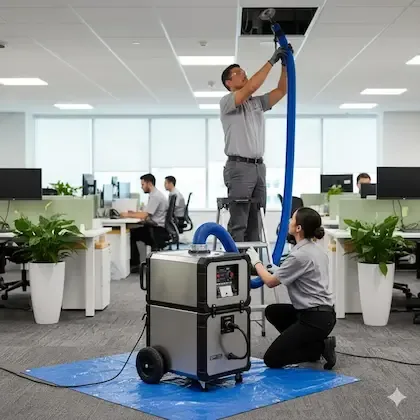
In an office, the ductwork above the ceiling tile is invisible right up until it becomes a problem you can feel — a conference room that never gets cold enough, a west-facing corner that's always stuffy, a floor of desks with a low hum of dust-and-allergen complaints nobody can trace. All of it moves through the same supply ducts, diffusers, and VAV boxes that haven't been opened since the building was fit out. Southeast Commercial Services cleans that air path at the source so comfort and air quality come back to the floor.
For over 30 years we've cleaned the HVAC systems in Atlanta's office towers, professional suites, and corporate campuses — working for the facility managers, property managers, and building engineers who answer for occupant comfort, tenant retention, and the energy line on the operating budget. Office duct cleaning is one line in a full commercial facility program, so it can be bundled with HVAC service, painting, or a lease-turn build-out under one contract.
Sending a crew into an occupied office tower after hours is a trust decision. Here's what clears our name through property management and procurement before we ever badge in.
We follow the association's source-removal principle — extracting contaminants under negative pressure, not fogging a chemical through your floors.
Established in 1991, with 30+ years cleaning the HVAC systems in the metro's office towers and professional workplaces.
Southeast Commercial Services of Georgia LLC — a registered, licensed contractor your property management team can verify.
General liability and workers' comp in place; we issue a certificate of insurance naming the property and owner on request.
The work runs when your tenants are gone — evenings, overnight, or weekends — so no floor loses a working day.
Each zone is isolated under negative pressure so dislodged dust flows to collection, never into an adjacent occupied suite.
Captured debris passes through HEPA filtration so fine particulate leaves the building instead of recirculating to desks.
Supply runs, diffusers and registers, VAV boxes and reheat coils, and ceiling-plenum returns — not just the visible trunk.
We work through building engineering on access, freight elevators, badging, and floor sign-off — not around them.
Before-and-after inspection and a written record for your maintenance file, tenant relations, and lease compliance.
In an office, dirty ductwork doesn't just look bad in a photo you'll never take — it shows up in occupant complaints, on the energy bill, and in the leasing conversation your ownership cares about most.
People spend a third of their day inside your ductwork's air. When it's loaded with dust and the diffusers are choked, the result is the office everyone quietly complains about — stuffy, uneven, hard to concentrate in. Cleaning the air path helps address:
When the same HVAC loop recirculates dust, mold spores, and volatile residue to every desk, occupants report the cluster of symptoms associated with sick-building syndrome. Source-removal cleaning targets the causes people feel first:
Every dust-fouled VAV coil and restricted duct is friction the system has to overcome. Your fans and compressors run longer and harder to hold setpoint, and it lands on the building's operating budget. Restoring the air path helps:
In an occupied office tower, duct cleaning goes wrong in ways that land squarely on the property manager. A crew that shows up during business hours and turns a floor into a dust event tenants complain about. A "cleaning" that skips the VAV boxes and plenum returns where the real buildup lives. A one-truck operation with no certificate of insurance, no after-hours plan, and no idea how your freight elevator or badging works. Any of those turns a routine line item into a tenant-relations headache.
We built our commercial operation to keep all of that off your desk. That means after-hours, tenant-coordinated scheduling, negative-air containment and HEPA collection so debris never reaches an adjacent suite, source removal instead of chemical cover-up, insured crews who badge in on the schedule they promised, and a single project lead who answers when you call. You get one contract, one accountable team, and floors your tenants never knew were serviced.
Cleaning runs evenings, overnight, or weekends, zone by zone, so no floor loses a working day and no occupant is disrupted.
Licensed and multi-million-dollar insured, with a certificate of insurance issued to the property and ownership on request.
No rotating subs. One project lead runs your job from inspection to post-verification and stands behind the result.
Source removal is a method, not a shortcut — and in an occupied office, it's a coordinated one. Every job follows the same disciplined sequence so the contaminants come out of the system while your tenants stay undisturbed.
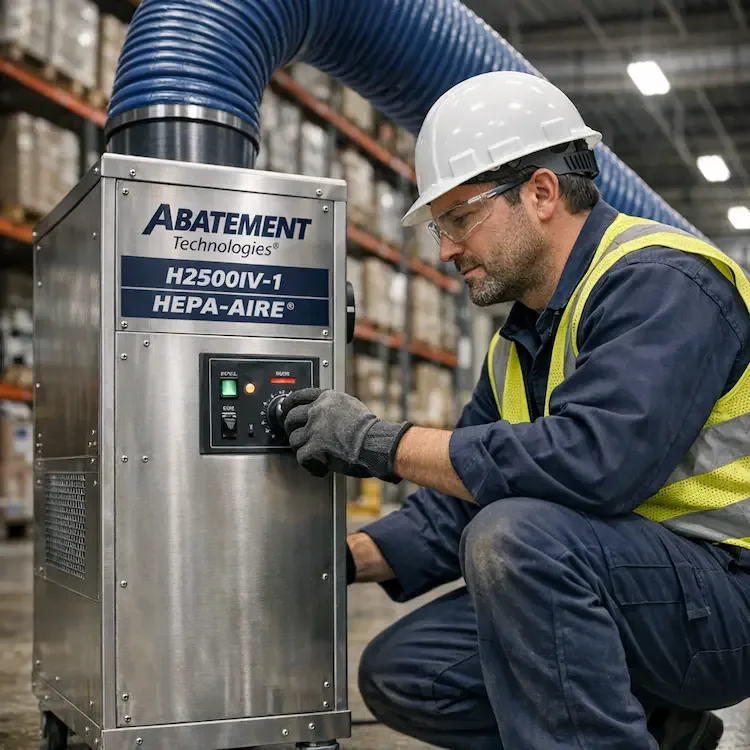
Portable and truck-mount negative-air machines put each zone under vacuum and route every dislodged particle through HEPA filtration before it can drift into an occupied suite.
See the Equipment →
Rotary brushes, air whips, and compressed-air tools physically break dust loose from duct walls and diffusers so the vacuum can carry it out — the core of source removal.
Our Standards →
We clean the VAV boxes, reheat coils, and ceiling-plenum returns where restriction and dust actually collect in an office — not just the visible supply duct.
We inspect the system with your building engineer, camera-check representative runs, and lock in after-hours access, freight-elevator use, and badging before a crew ever arrives.
Each zone is isolated and put under negative pressure so dislodged dust flows toward collection — never into an adjacent tenant suite or the corridor.
Rotary brushes, air whips, and compressed-air tools break dust loose from supply runs, diffusers, and registers throughout the floor.
The negative-air system extracts the loosened material through HEPA filtration, so fine particulate leaves the building rather than recirculating to desks.
VAV boxes, reheat coils, and open ceiling-plenum returns are cleaned to restore balanced airflow and remove the dust points that drive comfort complaints.
Where a system shows microbial growth, an EPA-registered antimicrobial can be applied after cleaning — a finish to source removal, never a substitute for it.
We re-inspect, restore ceilings and access panels, leave the floor as we found it, and document the work so property management has a record on file.
An office system laced with VAV boxes and plenum returns can't be cleaned with a shop vac and a wand. The method is defined by the standard we follow and the equipment that makes source removal possible in an occupied building.
Our work follows the National Air Duct Cleaners Association's source-removal principle — physically extracting contaminants under negative pressure rather than masking them, which is the benchmark specifiers and property managers ask for.
Portable and truck-mount negative-air units place each zone under vacuum, creating the pressure differential that pulls every dislodged particle toward collection instead of into an occupied suite.
Collected air is filtered through HEPA media, capturing the fine particulate that matters for office air quality — so what comes out of the duct doesn't settle back onto desks.
Mechanical agitation tools sized to office duct and diffusers dislodge caked dust that vacuum alone would leave behind — the difference between a real clean and a surface pass.
Duct-inspection cameras let us see conditions before we start and confirm the result after, turning "we cleaned it" into a documented before-and-after for your file.
Coil tools and cleaners restore the reheat-coil surfaces inside VAV boxes and air handlers — the part of an office system most responsible for lost airflow and comfort when it's fouled.
Source-removal cleaning isn't cosmetic. When the ducts, VAV boxes, and plenum returns are genuinely clean, the office runs better on every axis a property manager and their tenants actually feel.
Clearing choked diffusers and fouled VAV coils lets the system deliver balanced airflow again — fewer hot-and-cold complaints across the floor.
Pulling dust and allergens out of the airstream lowers the recirculated particulate that drives sick days, comfort tickets, and desk dust.
Clean reheat coils and clear ducts let the system hit setpoint with less runtime — easing the load on your operating budget.
Air quality is part of the tenant experience. A comfortable, well-maintained floor is one less reason for a tenant to look elsewhere at renewal.
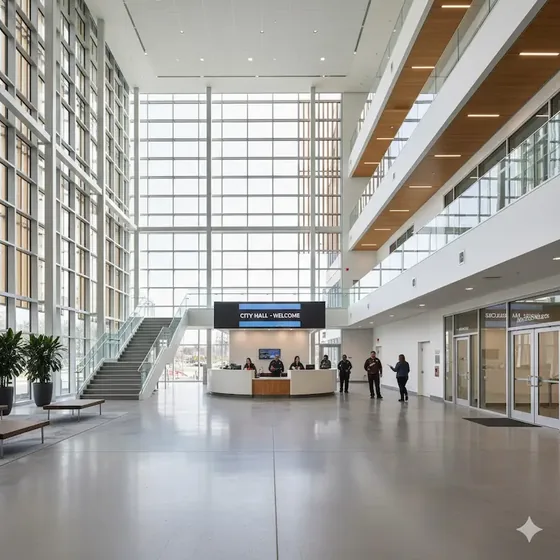
Every workplace carries its own occupancy pattern, air-quality expectation, and scheduling constraint. These are the office and professional environments we clean across metro Atlanta.
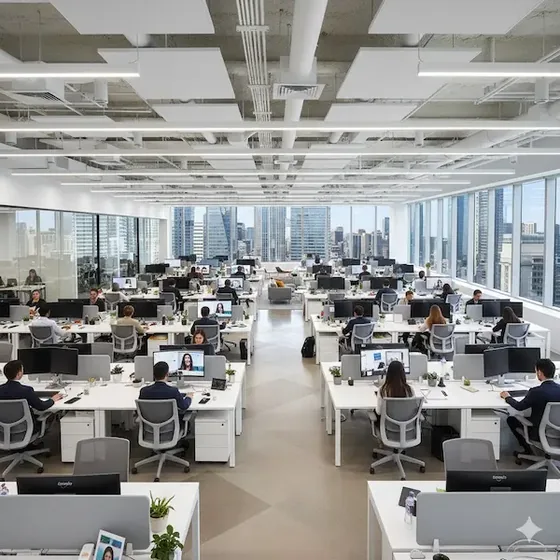
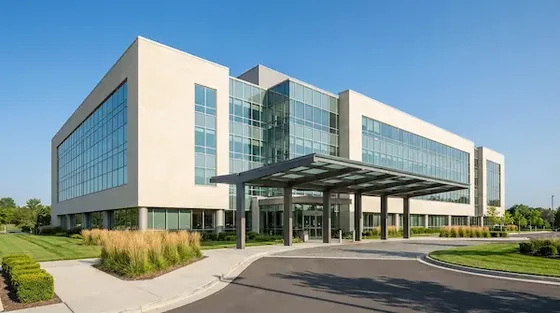
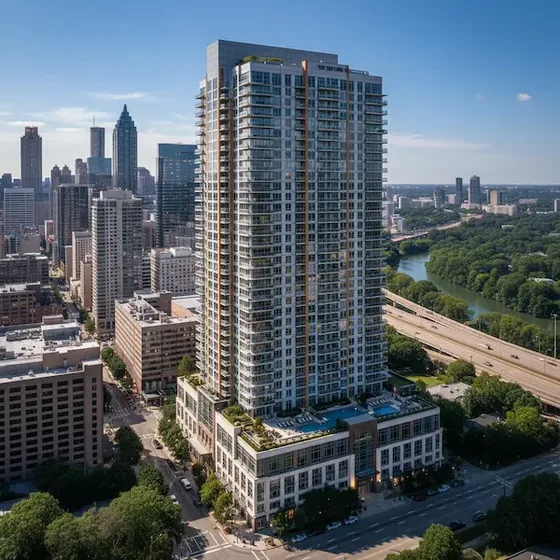
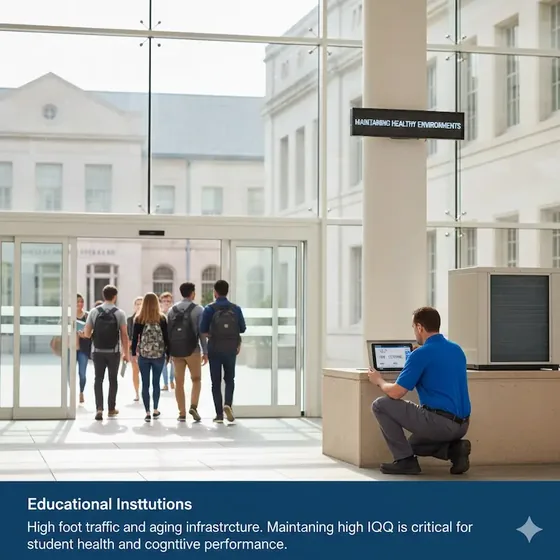
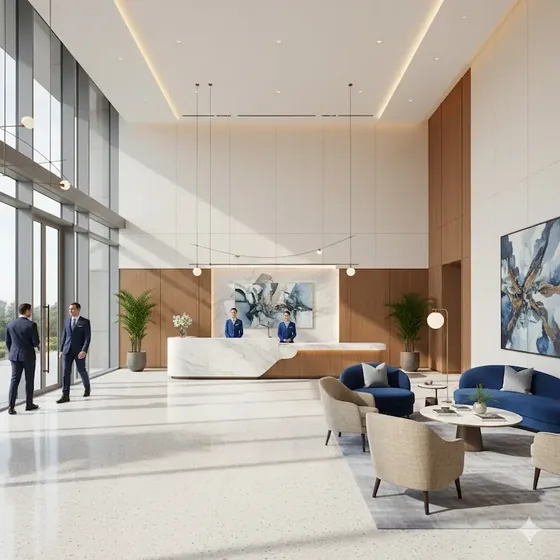
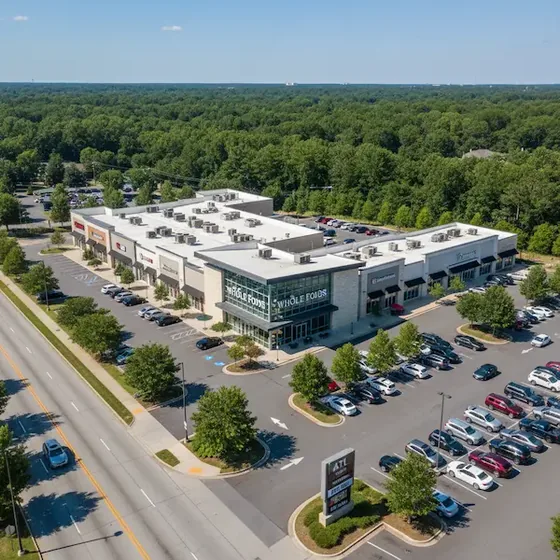
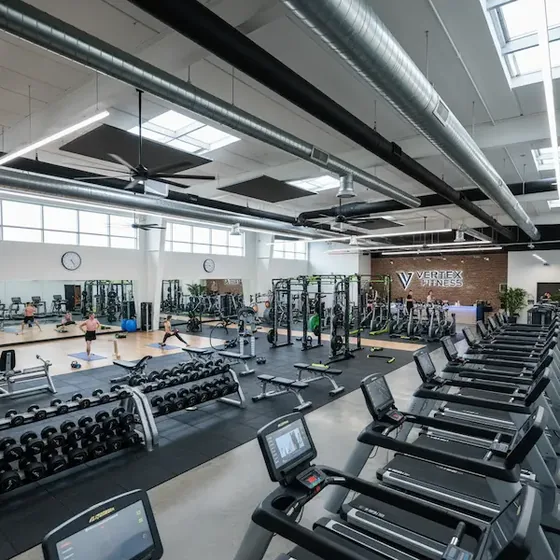
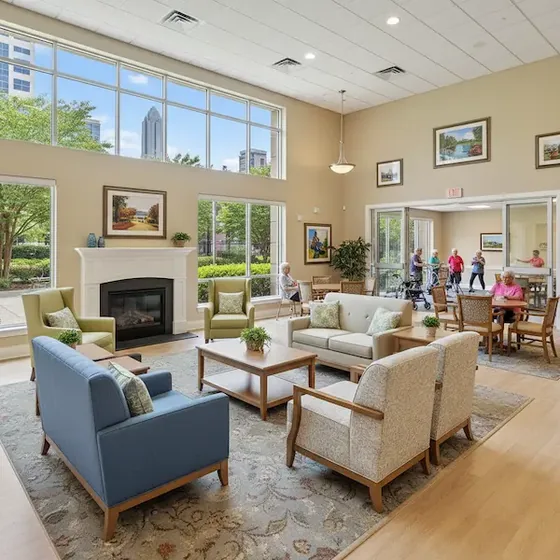
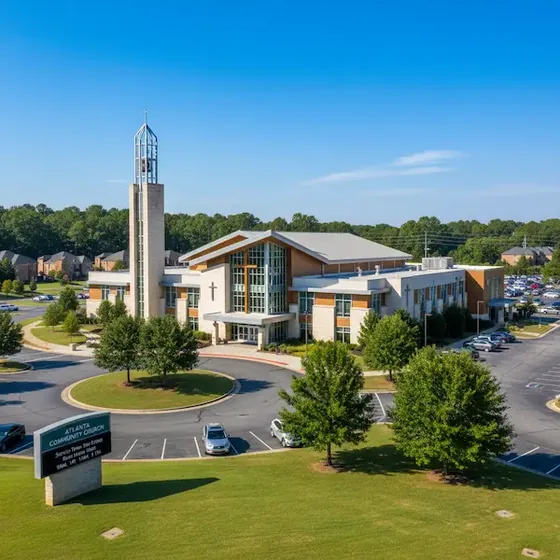
A real proposal for an office is a coordinated plan, not a flat per-vent price. When you compare bids, these are the six things that separate a professional office scope from a residential-style number.
We count and identify what actually has to be cleaned — supply and return runs by floor, the ceiling diffusers and registers, the VAV boxes and their reheat coils, and the plenum returns. Inventorying the system up front is what lets you compare bidders on equal terms instead of guessing whether "the whole floor" means the same scope to everyone.
The scope spells out when the work happens and how — evening, overnight, or weekend windows, freight-elevator and loading-dock scheduling, security and badging, and which suites are in scope per visit. This is the line that keeps a cleaning from becoming a business-hours disruption your tenants remember.
We name the method — NADCA-based source removal with mechanical agitation and HEPA-filtered extraction — rather than leaving "cleaning" undefined. Naming the standard holds us to it and tells you the dust is being removed from the building, not fogged over or pushed downstream into an occupied floor.
The scope lists exactly what's covered: supply runs, grilles, registers and diffusers, VAV boxes and reheat coils, and ceiling-plenum returns. In an office, the VAV boxes and plenum returns are where the comfort and efficiency gains live — so they're named explicitly, not quietly excluded.
We map the work to your building: which floors and zones are cleaned in what order and in which after-hours windows, and how long each phase takes. A phased plan is the difference between a cleaning that quietly happens around your tenants and one that disrupts a suite that needed to be open.
The scope defines how the job ends: post-cleaning inspection, restored ceilings and access, and before-and-after documentation of the work performed. A defined closeout gives you a verifiable record for your maintenance file, tenant relations, and lease compliance — not just a crew that packs up and drives away.
A floor changing hands is the single best moment to clean the ductwork — and the moment it's most often skipped. A tenant-improvement build-out and demolition push drywall dust, sawdust, and construction debris straight into the supply runs and open ceiling-plenum returns, and it sits there waiting for the HVAC system to distribute it to the incoming tenant on day one. New occupants notice that air immediately, and the complaint arrives before the boxes are unpacked.
Cleaning the system at turnover hands the incoming tenant a genuinely fresh floor — construction particulate and build-out odor removed at the source, VAV boxes and diffusers clear so the space holds temperature the way the design intended. For property management, it's also a documented deliverable: proof the space was turned over clean, which is exactly the kind of record that heads off a new-tenant air-quality dispute before it starts.
We schedule lease-turn cleaning into the build-out timeline so it lands after the dusty trades finish and before the tenant moves — one more line handled by the same team that can also manage the paint, flooring, and repairs on the turn.
An occupied office can't pause for a duct cleaning — staff report, clients visit, and tenants expect a normal working day. So we plan the work around your operation rather than through it. We clean one zone or floor at a time, in the after-hours windows your building allows, isolating each area under negative-air containment while the rest of the tower keeps serving the tenants who need it.
Our office hours run Monday through Friday, and the on-site cleaning is timed to your building's occupancy — typically evenings, overnight, or weekends so the crew is gone before your tenants arrive. Negative-air containment and HEPA collection keep dislodged dust out of occupied suites and corridors, and we protect finishes, furniture, and equipment while crews are on the floor, restoring ceilings and access panels before we leave.
The goal is simple: your tenants get cleaner, more comfortable air, and Monday morning looks exactly like Friday afternoon — except the floor breathes better.
From two Atlanta-area offices, Southeast Commercial Services cleans the HVAC systems in office towers and professional workplaces throughout Fulton, DeKalb, Gwinnett, Cobb, and Cherokee counties — from Buckhead high-rises to suburban office parks along the perimeter.
Planning a cleaning? Tell us the office type, rough square footage or number of floors, and how many HVAC units you run, and we'll schedule an after-hours walk-through and return a written scope you can act on.
Working from offices in Atlanta and Decatur, our crews reach office towers and professional workplaces across the region's major corridors and surrounding counties.
We follow the metro's office corridors — the Peachtree spine through Buckhead and Midtown, the I-285 perimeter office parks, and the GA-400 and I-85 business districts — to reach corporate towers, professional suites, and campus headquarters. Coverage spans Fulton, Cobb, Gwinnett, DeKalb, and Cherokee counties, from intown high-rises to the suburban office belts.
If your office building sits inside the greater Atlanta area, we can most likely service it. Not sure whether you're in range? Call (470) 458-2322 and we'll confirm coverage and set an after-hours walk-through.
Office duct cleaning often pairs with the rest of the HVAC and facility work a workplace needs — handled by the same accountable team on the same after-hours schedule.
Cleaning you can't see is cleaning you have to be able to trust. We stand behind the method, document the result, and give you a straight answer about what your office system actually needs.
Our work is guaranteed against being done to less than the source-removal standard we quote. If a cleaned system doesn't meet the scope, we make it right — that's the point of a documented method.
We inspect before and confirm after, and hand you before-and-after documentation of the work performed — a record for your maintenance file, tenant relations, and lease compliance, not just a verbal all-clear.
We'll tell you straight when an office system genuinely needs cleaning and when it doesn't — so your maintenance budget is planned on the building's real condition, not a sales calendar.
Office duct cleaning is the source removal of dust, allergens, and debris from an office building's HVAC air path — supply ducts, ceiling diffusers, VAV boxes, and plenum returns — using negative-air containment and HEPA collection to improve occupant comfort, air quality, and system efficiency. In Atlanta, it's provided by Southeast Commercial Services, a licensed, insured contractor using NADCA-based methods, commercial and industrial only.
Office work differs from a generic building cleaning in one word: coordination. It's scheduled after hours around working tenants, threaded through property management and building engineering, and contained so adjacent suites are never disturbed. Southeast has served Atlanta workplaces for over 30 years and sequences the job so your floors stay open and your occupants never notice a crew was in the tower.
Straight answers to what Atlanta property managers and facility managers ask before signing an office duct cleaning contractor.
Yes. Almost every office job we run is scheduled outside your tenants' working hours — evenings, overnight, or weekends — so desks stay staffed and no one arrives Monday to a disrupted floor. We isolate one air-handling zone at a time under negative-air containment, and we coordinate freight-elevator access, badge-in, and floor sign-off with your property manager or building engineer ahead of time. Our office runs Monday through Friday, and the on-site cleaning is timed to your building's occupancy, not ours.
Often, yes. Many comfort complaints in offices trace back to restricted airflow — dust-loaded diffusers, fouled VAV-box coils, and clogged ceiling-plenum returns that keep a zone from getting the air it was designed for. Clearing that buildup lets the system deliver balanced airflow again, which is what reduces the hot-desk-versus-cold-desk complaints and the stuffy, stale feeling in interior conference rooms. It also pulls recirculated dust and allergens out of the airstream that occupants breathe all day.
We clean the full air path for an office system. That includes supply trunks and branches, the ceiling diffusers and registers, the VAV boxes with their reheat coils, and open ceiling-plenum returns where the space above the tile doubles as the return-air path. Plenum returns are where a surprising amount of construction dust and debris collects in office buildings, so leaving them out means leaving the real problem in place.
It's one of the best times to do it. A lease turn or tenant-improvement build-out fills the ductwork and plenum with drywall dust, sawdust, and demolition debris, and a new tenant will notice that air on day one. Cleaning the system at turnover hands the incoming occupant a genuinely fresh floor, removes the odor and particulate a build-out leaves behind, and gives property management documentation that the space was delivered clean.
We work through your property management and building engineering team, not around them. Before any crew arrives we confirm after-hours access, freight-elevator and loading-dock scheduling, security and badging requirements, and which floors or tenant suites are in scope for each visit. Negative-air containment and HEPA collection keep dislodged debris out of adjacent occupied suites, and we can provide a certificate of insurance naming the property. The goal is that other tenants never know we were in the building.
When the system is genuinely fouled, yes — dirty reheat coils and dust-restricted ducts force fans and compressors to work harder to move and condition the same air, which shows up on the building's utility bill. Restoring clean coil surfaces and clear airflow lets the equipment hit setpoint with less runtime and less strain. We won't promise a fixed percentage, because it depends on how dirty the system was to begin with, but reducing airflow restriction is a direct lever on the energy an office HVAC system consumes.
Tell us the office type, rough square footage or number of floors, and how many HVAC units you run. A Southeast Commercial Services team member will follow up to schedule an after-hours walk-through — typically within the hour, Monday–Friday.