
Call Now for Fast Service
(404) 924-7071
We coat the buildings that keep Atlanta's freight moving — distribution centers, plants, and logistics facilities — from structural steel and deck to dock walls, applied around your shifts. Southeast Commercial Services is a licensed, insured industrial painting contractor working commercial and industrial only.
Tell us about your facility and coating scope — we typically reply within the hour (Mon–Fri).
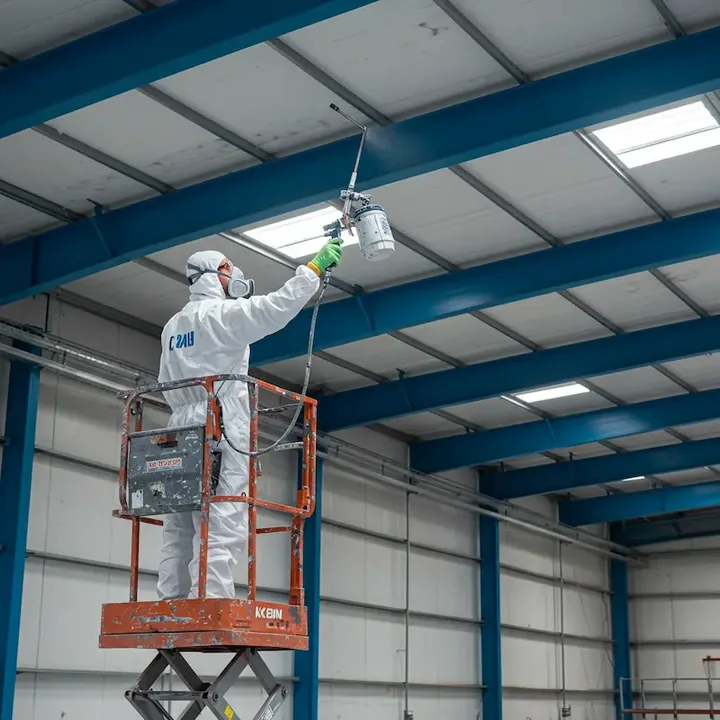
A warehouse repaint isn't a cosmetic exercise — it's protecting steel that holds up your roof, walls that take forklift hits, and dock areas that never rest. Southeast Commercial Services specs the coating to the substrate, sequences the crew around your throughput, and hands you a written scope your operations team can hold us to.
For over 30 years we've coated the distribution centers, plants, and logistics buildings that move Atlanta's freight — working for the facility managers, plant directors, and operations leads who answer for how those buildings perform. Painting is one line in a full facility program, so steel and wall coatings can be bundled with epoxy floors, line striping, and safety marking under one contract.
Bringing a painting crew into a live distribution center or plant is a risk decision. Here's what clears our name through operations and procurement before a lift ever rolls in.
Established in 1991, with 30+ years coating warehouses, plants, and distribution facilities across metro Atlanta.
Crews trained and equipped for scissor and boom lifts, fall protection, containment, and working above active floor operations.
Southeast Commercial Services of Georgia LLC — a registered, licensed contractor your risk team can verify.
Trained to install DTM, epoxy, and urethane systems to the manufacturer's data sheet — the standard that keeps corrosion warranties valid.
General liability and workers' comp in place; we issue a certificate naming your facility before we mobilize.
Bonding gives owners and operators a layer of financial recourse most spray crews can't offer.
Set up to phase work around shifts, racking, and inbound freight so production keeps running while we coat.
We don't paint houses. Every crew, spec, and schedule is built for warehouses, plants, and business facilities.
Measured quantities and named coating systems so you can compare us against other bidders line for line.
A single project lead owns your job start to finish and coordinates directly with your floor supervisors.
A warehouse mixes steel, masonry, and concrete under one roof — each takes different prep and a different coating chemistry to survive the way an industrial building gets used.
Industrial buildings stack a dozen substrates from the slab to the ridge. We coat:
We spec the finish to the exposure it lives in — corrosion, impact, wash-down, or chemical:
On a live floor the coating is only as good as how the job is managed around your operation. We:
In a warehouse, a painting job rarely goes wrong on color. It goes wrong on the things a plant manager actually answers for — a lift parked in a live pick aisle, overspray drifting onto palletized product, a crew that stops production because nobody coordinated the shift, or a "contractor" who turns out to be one guy who's never worked above a running floor. Those problems land on your desk, not the painter's.
We built our industrial operation to keep those problems off the floor. That means insured crews trained to work over active operations, containment planned before a sprayer is charged, lift and access sequenced with your supervisors, and a single project lead who answers when you call. You get one contract, one accountable team, and a building that keeps shipping while it gets recoated.
Work is phased zone by zone around your shifts so freight keeps moving and the floor stays productive throughout the job.
Licensed, bonded, and multi-million-dollar insured, with a certificate of insurance issued to your facility before we mobilize.
No rotating subs. One project lead runs your job from walkthrough to final punch-list and coordinates with your floor team.
Beyond steel and wall coatings, we handle the floor, marking, and metal-prep work a warehouse or plant usually needs on the same mobilization.
From a single dock wall to an entire distribution campus, here's the range of surfaces and buildings Southeast coats across metro Atlanta.
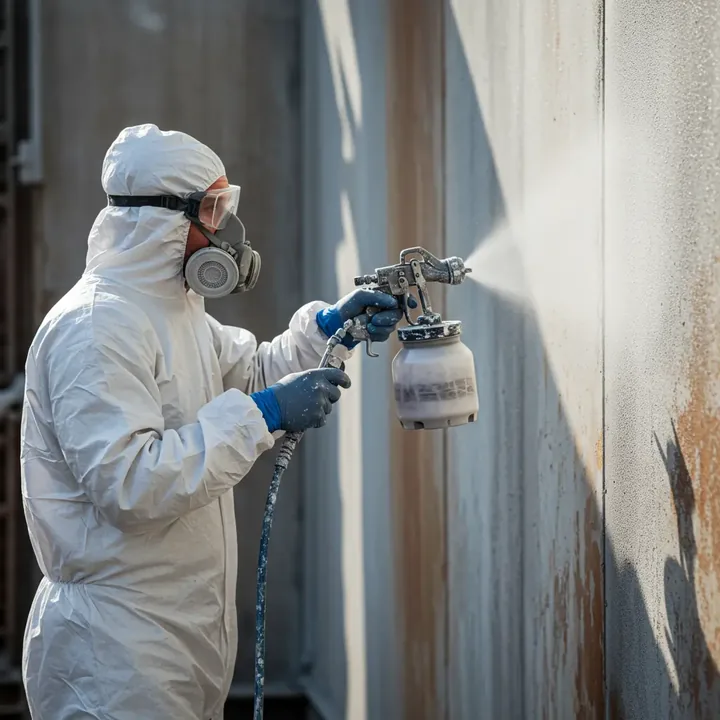
Columns, bar joists, and metal roof deck sprayed with direct-to-metal and rust-inhibitive systems — corrosion protection for the framework holding your building up.
Steel Coatings →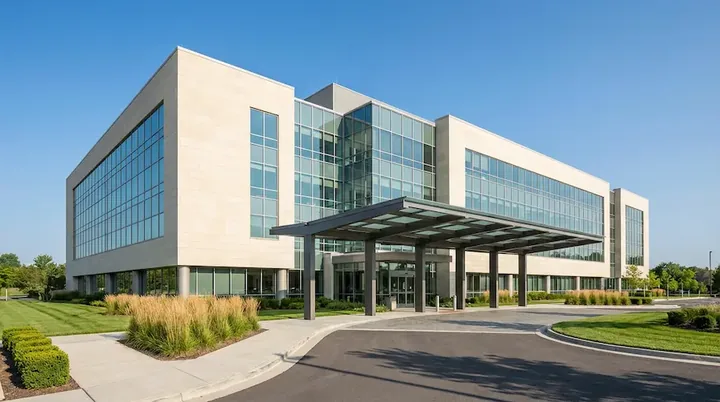
Interior and exterior tilt-up panels, CMU block, and dock areas sealed against impact, moisture, and constant loading-bay traffic.
Wall Coatings →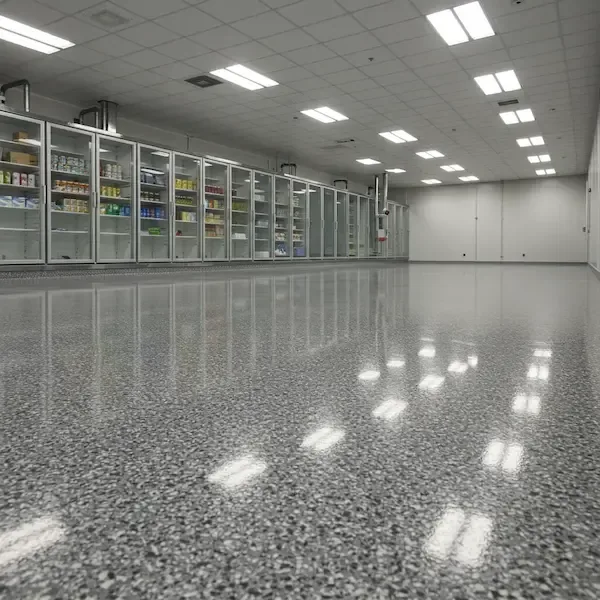
When the steel gets coated, the slab often needs it too. We handle epoxy floor systems and warehouse line striping so walls, floors, and markings land on one schedule.
Epoxy Flooring →High-bay steel, deck, and block walls coated in durable systems that stand up to forklifts, racking loads, and around-the-clock throughput.
Plant walls, structural steel, equipment framing, and process areas coated with specification-grade primers and chemical- and abrasion-resistant finishes.
Dock walls, door frames, and loading bays sealed and safety-marked to survive impact, weather exposure, and constant trailer traffic.
Mezzanine steel, stairs, guardrails, and the surfaces surrounding racking systems coated with minimal disruption to stored product.
Guardrails, bollards, pedestrian lanes, and hazard zones marked in compliant safety colors to keep your floor inspection-ready.
Power washing, rust and mill-scale removal, abrasive blasting, and specification-grade priming — the prep that decides how long an industrial coating lasts.
Coating a live industrial building is a risk decision as much as a coating decision. Here's what an operations manager gets when the contractor is Southeast.
Off-shift work, phased zones, and coordination with your supervisors keep the floor running and freight moving while we coat.
We measure the steel and wall area, spec the coating system, and put it in writing — so you can vet contractors on the same terms.
Multi-million-dollar insured, bonded, and licensed in Georgia, with crews trained for lift work, containment, and coating over active operations.
30+ years of Atlanta industrial work — and painting bundles cleanly with epoxy floors, line striping, and safety marking under one team.
A repeatable, five-step process that turns an industrial repaint from an open-ended disruption into a scheduled, documented job your operations team can plan around.
We meet you at the building, assess steel and wall condition, ceiling height, lift access, and the shift constraints we'll have to work around.
You get a measured, itemized proposal naming the coating systems and spelling out exactly what's included — no vague "and more."
Before coatings go up we wash, treat rust, blast where needed, mask, and contain — protecting racking, product, and machinery.
Crews apply primer and finish coats to specification, zone by zone in the phases we agreed on, keeping your floor running.
We walk the finished job with your floor lead, work a punch-list to sign-off, and clear the site before we call it complete.
A real industrial proposal is a document, not a dollar figure. When you compare bids on a warehouse or plant, these are the six things that separate a professional scope from a number on a business card.
We measure the actual surface area in scope — steel column and joist footage, deck area, wall square footage — and note the lift equipment and reach each zone requires. Measured quantities and a documented access plan are what let you compare bidders honestly, and they stop the mid-job surprise where a vague "whole warehouse" estimate balloons once the boom lift is on site.
The proposal states how each substrate gets readied: pressure washing, degreasing, rust and mill-scale removal, and abrasive blasting on steel that needs a clean profile before coating. Bare metal and worn masonry get a specification-grade primer. On industrial surfaces, prep is where a coating's service life is won or lost — so it's spelled out, not assumed.
We name the product line, the number of coats, the dry-film thickness, and the sheen for each surface — DTM and rust-inhibitive systems on steel, epoxies and urethanes where impact or chemicals demand them. Naming the system holds us to a defined standard and keeps the manufacturer's corrosion warranty intact, because the material is installed the way its data sheet requires.
The scope details how we shield everything that isn't getting coated — racking and stored product, conveyors, machinery, and adjacent finishes — with plastic containment and overspray control tuned for a live floor. On occupied jobs this line item is what protects you from a product-contamination or cleanup dispute after we leave.
We map the work to your operation: which zones get coated in what order, what runs during production versus off-shift or weekend windows, and how long each phase takes. A phased plan is the difference between a repaint that quietly happens around your throughput and one that idles a pick line or blocks a dock you needed open.
The scope defines how the job ends: a final walkthrough with your floor lead, a documented punch-list, touch-ups to sign-off, site cleanup, and any warranty paperwork or maintenance guidance you're owed. A defined closeout means the project has a clear finish line everyone agrees on — not a crew that drifts off before the last details are handled.
Most of the warehouses and plants we coat can't simply shut down for a paint job — trailers still back into docks, pickers still work the aisles, and lines still run. So we plan the work around your operation rather than through it. We coat zone by zone, isolating the bay or aisle we're in and finishing it before moving on, so the parts of the building your throughput depends on stay usable.
Our office hours run Monday through Friday, and we phase the work to fit the rhythm of your facility — concentrating high-reach steel and deck work in your lowest-traffic windows, running off-shift or overnight where a lift can't safely share airspace with a running floor, and keeping active docks, exits, and racking clear. Containment and overspray control keep product and machinery protected while operations continue around us.
Every crew follows OSHA practices for lift and fall protection, ladder safety, and containment, so the job stays safe for your people as well as ours — which matters most when our work overlaps your production. The goal is simple: you get a freshly coated, corrosion-protected building, and your operation barely feels the crew was there.
From two Atlanta-area offices, Southeast Commercial Services coats warehouses, distribution centers, and plants throughout Fulton, DeKalb, Gwinnett, Cobb, and Cherokee counties — from intown industrial parks to the distribution belts along the perimeter.
Planning a warehouse repaint? Tell us the facility type, rough square footage, and your timing, and we'll schedule a walkthrough and return a written scope you can act on.
Working from offices in Atlanta and Decatur, our crews reach warehouses, plants, and distribution sites across the region's major freight corridors and surrounding counties.
We follow the metro's freight arteries — the I-75, I-285, and I-85 corridors — to reach the distribution centers, plants, and business parks that anchor Atlanta's logistics economy. Coverage spans Fulton, Cobb, Gwinnett, DeKalb, and Cherokee counties, from intown industrial districts to the warehouse belts on the perimeter.
If your facility sits inside the greater Atlanta area, we can most likely walk it. Not sure whether you're in range? Call (404) 924-7071 and we'll confirm coverage and set a walkthrough.
Every industrial building type carries its own coatings, access, and scheduling demands. These are the warehouse and plant facilities we're built to handle.
High-bay steel, deck, and block coated to survive forklifts, racking loads, and constant throughput.
Plant walls, mezzanines, and equipment framing coated with specification-grade industrial systems.
Pick-and-pack floors and cross-dock buildings coated and safety-marked around the clock.
Wash-down-rated epoxy and urethane systems for temperature-controlled and food-grade facilities.
Assembly, fabrication, and heavy-equipment plants coated with impact- and chemical-resistant finishes.
Structural steel, tanks, and process areas coated for corrosion protection in demanding environments.
Truck terminals, transfer buildings, and dock facilities sealed against traffic, weather, and impact.
Municipal, military, and institutional warehouses coated to spec and compliance requirements.
An industrial coating protects an asset you have to answer for — the steel holding up your roof and the walls taking daily impact. We stand behind the labor and install to protect the products that stand behind the finish.
Our labor is warranted against application defects — peeling, blistering, or coating failures that trace back to how the system was installed rather than how the facility is used.
Because we install DTM and industrial systems to the manufacturer's specification, the coating carries its own product and corrosion warranty. Installing to spec is exactly what keeps that coverage valid.
We'll tell you honestly what a given system should deliver on your steel and your exposure — so your maintenance budget is planned on real service life, not a sales number.
Warehouse and industrial painting is the coating of distribution, storage, and manufacturing facilities — structural steel, roof deck, tilt-up and block walls, dock areas, and mezzanines — using direct-to-metal and high-performance systems built to resist corrosion, abrasion, and heavy use. In Atlanta it's provided by Southeast Commercial Services, a licensed, insured industrial painting contractor.
It differs from standard commercial painting in substrate, coating chemistry, and access: crews spray and roll steel columns and decking at height, spec corrosion-resistant primers for metal, add OSHA safety color coding, and phase the work around 24/7 operations. Southeast has coated Atlanta warehouses and plants for over 30 years, sequencing jobs so freight keeps moving while the work gets done.
Straight answers to what Atlanta plant and facility managers ask before signing an industrial painting contractor.
Yes. Most of the distribution centers and plants we coat never fully stop, so we build the work around your shifts. We paint zone by zone, isolate the aisle or bay we're in, and coordinate with your floor supervisors so forklifts, pickers, and inbound freight keep moving. High-reach steel and deck work is timed to slower windows or overnight so a live operation is never sharing airspace with a lift.
Structural steel columns and bar joists, metal roof deck, tilt-up and CMU block walls, dock and loading areas, mezzanines and stairs, guardrails and bollards, and the surfaces surrounding racking systems. On the manufacturing side we also coat plant walls, equipment framing, and process areas that need chemical- or abrasion-resistant finishes.
Cost is driven by the size of the building, ceiling height and how much high-reach access is needed, the condition of the steel and walls, the coating system specified, and how much of the work has to run off-shift. Instead of quoting a blind rate, we walk the facility, measure the surfaces, and return a written scope so you can compare bidders line for line. Call (404) 924-7071 to book a walkthrough.
Yes. Warehouse steel, decking, and plant equipment call for coatings built for the environment, not standard wall paint. We apply direct-to-metal (DTM) systems, industrial epoxies, and urethane topcoats for corrosion protection, along with abrasion- and chemical-resistant finishes where the process demands it. The system is matched to the substrate and the exposure it has to survive.
Yes. Warehouse painting rarely stops at the walls. We handle OSHA safety color coding on guardrails, bollards, and hazard zones, and we cross over into epoxy floor coatings and warehouse line striping so your aisles, staging areas, and pedestrian lanes are marked to code — all schedulable under one contract.
Yes. Southeast Commercial Services of Georgia LLC is licensed, bonded, and carries multi-million-dollar insurance, and we issue a certificate naming your facility or property manager before we mobilize. Our crews follow OSHA requirements for lift and fall protection, containment, and working over active floor operations — which matters on a jobsite where our work overlaps your production.
Tell us the facility type, rough square footage, and your timing. A Southeast Commercial Services team member will follow up to schedule a walkthrough — typically within the hour, Monday–Friday.