
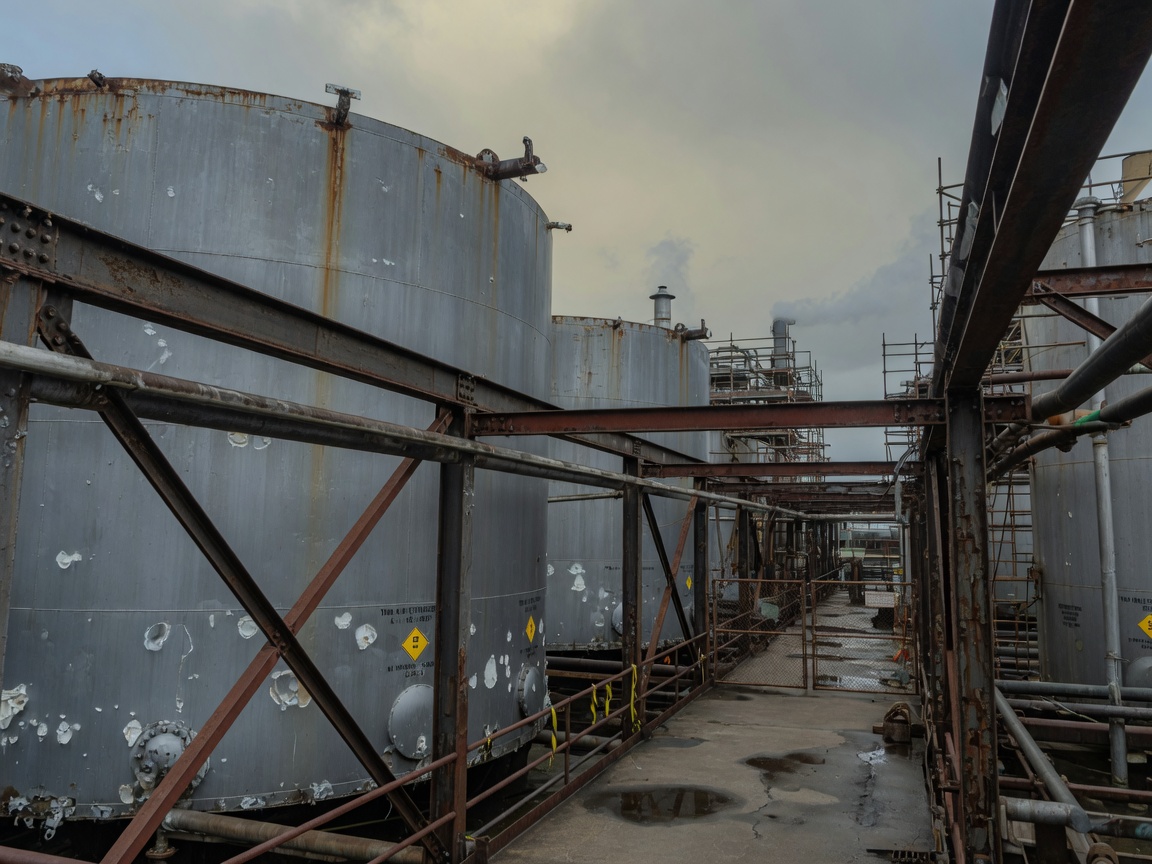
The honest answer to “how often should we repaint our tanks?” is that there isn’t a magic number of years — and any contractor who gives you one without inspecting the steel is guessing. Coating life on a steel storage tank or structural steel is driven by how the last coating was prepared and applied and by what the steel lives in, not by the calendar. The defensible approach that industrial-coatings guidance points to is simple: build an annual inspection into the maintenance schedule and recoat on condition. That turns a guess into a plan, and it’s the difference between catching corrosion early and paying to repair pitted steel later.
This is written for the plant, facility, and maintenance manager scheduling capital coating work on tanks, elevated and ground steel, structural members, and process equipment — the person who has to defend a recoat line in next year’s budget. Here is why the interval is condition-based, what actually determines coating life, the surface-prep standards that set the cost, and the inspection cues that mean it’s time.
Why There’s No Universal Recoat Interval
It’s tempting to want a number — “repaint every seven years” — because it makes budgeting easy. But that number would be wrong more often than right, because the things that consume a coating vary from tank to tank:
Surface prep at the last recoat. A coating applied over properly prepared steel bonds and lasts; one applied over loose rust or mill scale starts failing early no matter how good the paint is.
The coating system. A single-coat repaint and a full zinc-rich primer / epoxy / polyurethane system are not in the same league on service life.
The environment. Humidity, chemical exposure, immersion, salt, and UV all attack coatings at different rates. A tank in a dry, mild setting and one in a wet, corrosive industrial corridor age on completely different clocks.
Mechanical wear. Abrasion, impact, and thermal cycling break the film in localized spots that then become corrosion starting points.
Because those variables dominate, the reliable method isn’t a calendar — it’s an eye on the asset. As one industrial-coatings source frames it, if you wait until paint is peeling or rust is visible, you’ve already lost valuable protection, which is why the right move is to build annual inspections into the maintenance schedule and act on what they find.
What Actually Determines How Long a Coating Lasts
Two levers do most of the work: surface preparation and the coating system. And their combined effect is bigger than most facility managers expect.
Consider a documented example. As reported by industrial-coatings guidance, a set of outdoor storage tanks at a chemical plant had a coating that was “barely holding on after four years.” The crew stripped the tanks, then rebuilt the system with a zinc-rich primer, an epoxy mid-coat, and a polyurethane finish. The result: the tanks went about eight years with only minor touch-ups. Same tanks, roughly double the service life — because the preparation and the multi-coat system were done right. That figure is illustrative of what proper prep and a quality system can do, not a guaranteed outcome for every tank, but the mechanism is real: each coat has a job. The zinc-rich primer provides galvanic corrosion protection at the steel; the epoxy mid-coat builds a tough, chemical-resistant barrier; the polyurethane finish resists UV and weathering and keeps the system from chalking prematurely.
The lesson for budgeting is that a cheaper repaint that skimps on prep or collapses the system into one coat isn’t saving money — it’s buying a shorter interval and an earlier return to the same scaffolding.
The SSPC Surface-Prep Ladder (and Why It Sets the Price)
When you get a tank or structural-steel recoat bid, the biggest cost driver usually isn’t the paint — it’s the surface preparation spec. The SSPC/AMPP surface-preparation standards define a ladder of cleanliness, and a maintenance recoat is scoped against it:
| Standard | Method | Typical use |
|---|---|---|
| SSPC-SP 1 | Solvent cleaning — removes oil, grease, and soluble contaminants | Always first; a prerequisite before any mechanical prep |
| SSPC-SP 2 | Hand-tool cleaning — scraping, sanding, wire brushing loose material | Spot repair, light loose rust and coating on small areas |
| SSPC-SP 3 | Power-tool cleaning — grinders, wire cup brushes, needle guns | More aggressive removal of loose rust, mill scale, and coating |
| Abrasive blast (full rehab) | Blasting to a specified bare-metal cleanliness | Badly corroded tanks and full-system replacement |
The practical point: SP 1 solvent cleaning comes first on essentially every job, then the bid steps up the ladder based on how much sound coating remains and how corroded the steel is. A tank with mostly intact coating and localized rust may be a hand- or power-tool spot repair; a tank that’s failing broadly is an abrasive-blast rehabilitation. Because the prep level drives labor, access, containment, and disposal, the prep spec — not the paint — is what moves the number. This is exactly why two bids on the “same” tank can differ so much: they’re often pricing different prep levels. Our guide on how to spec a coating project and compare bids apples-to-apples covers how to pin the prep standard in writing so every bidder prices the identical scope.
The Inspection Cues That Mean “Recoat Now”
If the interval is condition-based, the inspection is where the decision gets made. These are the visible signals a coating is at or past the end of its protective life:
Rust at edges, welds, and fasteners. Corrosion starts where the coating is thinnest and most stressed — sharp edges, weld seams, bolt heads. Rust here is the earliest and most reliable warning.
Blistering. Bubbles under the coating mean the bond is breaking — from moisture, contamination under the film, or a failing prior coat. Blisters become the next rust sites.
Chalking. A powdery, dull surface is the coating’s resin breaking down under UV. On its own it’s a maintenance-level signal; combined with other cues it says the finish is spent.
Undercutting. Rust creeping sideways underneath the coating from a scratch, chip, or breach. By the time you see it, corrosion is advancing under an intact-looking film — a clear recoat trigger.
The through-line: by the time rust is visible or the coating is lifting, protection has already been lost, and steel that’s allowed to keep corroding costs more to bring back than a timely recoat would have. That’s the whole case for the annual look.
The Atlanta Factor
Environment sets the clock, and metro Atlanta’s is not a mild one for exposed steel. High humidity, warm-season moisture, and industrial-corridor conditions all accelerate corrosion, which pushes tanks and structural steel toward the shorter end of any service-life range. Practically, that’s a reason to keep the annual inspection on the calendar rather than assume a coating that lasted a decade in a dry climate will do the same here — and a reason to spec prep and coating systems that account for moisture rather than the minimum that passes on install day.
Turning This Into a Maintenance Plan
The workable version of all this is straightforward: put an annual coating inspection of your tanks and structural steel on the maintenance schedule, document what each inspection finds (edge rust, blistering, chalking, undercutting, and where), and recoat the assets that have crossed from “monitor” into “losing protection” — spec’d to the prep level the condition actually calls for. That’s how we approach industrial tank painting and broader structural steel and industrial painting — inspect the asset, scope the prep honestly against SSPC standards, and build a system that reaches its rated life instead of a cheap recoat that puts you back on the scaffolding early. If you’re also budgeting broader plant coating work, our breakdown of what drives industrial painting cost in Atlanta covers the factors that move those numbers.
Frequently asked questions
How often should an industrial storage tank be recoated?
There is no universal number of years. Industrial-coatings guidance is to build an annual inspection into the maintenance schedule and recoat based on the condition of the coating, not a fixed calendar. How long a system lasts depends on the coating used, the quality of the original surface preparation, and the service environment — a tank in a humid, corrosive setting degrades faster than one in a mild, dry one.
Why isn’t there a fixed repaint interval for structural steel?
Because coating life is driven by variables, not the calendar: the surface-prep standard used at the last recoat, the coating system’s quality, exposure to humidity and chemicals, and mechanical wear. Two identical tanks can need recoating years apart. Waiting for a set number of years risks recoating too early and wasting budget, or too late and letting corrosion undercut the steel. Annual inspection catches the right moment.
What are the signs a steel tank or structural steel needs recoating?
The visible cues are rust at edges, welds, and fasteners; blistering of the coating; chalking (a powdery surface as the coating breaks down); and undercutting, where rust creeps beneath the coating film from a breach. If you can see rust or the coating is lifting, protection has already been lost — that is a recoat signal, not a wait-and-see.
What surface prep standards apply to recoating steel?
The SSPC/AMPP surface-preparation standards define the ladder. SSPC-SP 1 is solvent cleaning to remove oil and grease. SSPC-SP 2 is hand-tool cleaning of loose rust and coating. SSPC-SP 3 is power-tool cleaning for the same, more aggressively. A full rehabilitation of a badly corroded tank typically calls for abrasive blasting to bare metal. The prep spec, more than the paint, sets both the durability and the price.
Does surface prep really affect how long the coating lasts?
Yes — dramatically. As reported by industrial-coatings guidance, one set of outdoor storage tanks that had failed after about four years was stripped and rebuilt with a zinc-rich primer, epoxy mid-coat, and polyurethane finish, and then went about eight years with only minor touch-ups. Proper preparation and the right multi-coat system roughly doubled the service life of the same tanks. That example is illustrative, not a guaranteed outcome.
Why does humidity in Atlanta matter for tank recoating?
Moisture and industrial-corridor conditions accelerate corrosion, so tanks and structural steel in humid metro-Atlanta settings tend to degrade toward the shorter end of any service-life range. That is a reason to keep annual inspections on the schedule rather than assuming a coating that lasted a decade elsewhere will last a decade here.